



Onshore media buying means purchasing China ad inventory through a local Chinese entity, using local platform accounts, paying in RMB, and keeping data and operations inside mainland China. Offshore (cross-border) media buying means reaching Chinese audiences from outside the mainland — typically through a Hong Kong or Singapore entity and cross-border platform access — without a local company or an ICP license. Both can reach Chinese consumers. They differ sharply in setup time, compliance obligations, cost structure, and how much of the ecosystem you can actually access.
Choosing between them is one of the first real decisions a brand faces when entering China. This post lays out the trade-offs in full, with a comparison table and a checklist to help you decide.
What “onshore” really involves
Going onshore means operating as a local advertiser. In practice that requires:
-
A local legal vehicle — a Wholly Foreign-Owned Enterprise (WFOE), a joint venture, or a sponsoring Chinese partner.
-
An ICP filing or license. Any website or service hosted on mainland servers needs one, issued by the Ministry of Industry and Information Technology (MIIT). A simple ICP Filing (备案 / Bei’an) covers non-commercial sites; a Commercial ICP License (ICP证) is required if the site sells, advertises, or takes payment — and that commercial license can generally only be held by a 100% Chinese-owned company or a JV where foreign ownership stays at or below 50%.
-
Local platform seats (Ocean Engine, Tencent, Alimama, etc.) opened under the local entity.
-
RMB payment and local invoicing (fapiao) for tax compliance.
-
Data handling under PIPL — China’s Personal Information Protection Law — including data-localisation expectations.
Reality-check callout: For most foreign brands, the ICP requirement is what turns a “two-week filing” into a ~six-month project, because you need the local entity, a domain registered with a Chinese registrar, and name details that match character-for-character before MIIT will accept the application.1 (This is a general timeline, not a guarantee — timelines vary by province and sector.)
1 Source: CHINA FY.
What “offshore” (cross-border) really involves
Going offshore means reaching Chinese consumers without establishing locally:
- A non-mainland entity — commonly Hong Kong or Singapore.
- No ICP license (ICP rules apply to mainland-hosted infrastructure; offshore hosting isn’t legally required to file).
- Cross-border platform access — buying into Chinese platforms via their international/cross-border ad programs or a cross-border partner.
- Payment in foreign currency, typically simpler for a global finance team.
- Cross-border data flows, which still fall under PIPL’s cross-border transfer rules when you’re handling Chinese users’ personal information.
The trade-off: faster and simpler to stand up, but with narrower access to certain onshore inventory and formats, and cross-border network/performance considerations (the “Great Firewall” adds latency for mainland-hosted experiences you don’t control).
Full comparison
| Dimension | Onshore | Offshore (cross-border) |
|---|---|---|
| Legal entity needed | WFOE, JV, or local sponsor | Non-mainland entity (e.g. HK/SG) |
| ICP license/filing | Required for mainland-hosted sites/services | Not required (no mainland hosting) |
| Setup time | Longer — often ~6 months incl. ICP | Faster — weeks |
| Platform/inventory access | Broadest — full onshore seats and formats | Narrower — cross-border programs, some limits |
| Payment & invoicing | RMB + local fapiao | Foreign currency, simpler for global finance |
| Data & compliance | Data localisation under PIPL | Cross-border transfer rules under PIPL |
| Performance (owned assets) |
Local hosting = lower latency | Cross-border latency unless optimised |
| Cost & overhead | Higher fixed/legal overhead | Lower to start |
| Best for | Long-term commitment, commerce, scale | Testing, entry, brand/awareness campaigns |
Pros and cons
Onshore — pros: widest access to inventory and platform features; local invoicing and RMB spend; lower latency for locally hosted experiences; signals long-term commitment to platforms and partners.
Onshore — cons: slow to set up; higher legal and operational overhead; ICP and entity requirements; full exposure to local compliance obligations.
Offshore — pros: fast to launch; lower upfront cost and overhead; simpler finance; a low-risk way to test the market before committing.
Offshore — cons: narrower access to some onshore inventory/formats; cross-border data and performance considerations; can constrain scale as you grow.
Which should you choose? A quick checklist
Lean onshore if you can check most of these:
- China is a core, long-term market — not a test.
- You plan to run e-commerce / take payment locally (Tmall, JD, mini-program stores).
- You need the full range of platform formats and inventory.
- You expect meaningful, sustained media spend.
- You have the time and resources for a ~6-month setup and ongoing compliance.
Lean offshore (cross-border) if:
- You’re testing demand or running an entry / awareness campaign.
- Speed to launch matters more than maximum inventory access.
- You want to limit upfront legal and operational commitment.
- Your finance team strongly prefers foreign-currency billing.
- You’ll revisit the onshore question once results justify it.
Many brands sensibly start offshore and migrate onshore as their China business proves out.

Myth vs. fact
- Myth: “Offshore means I can ignore Chinese regulations.” Fact: If you’re handling Chinese users’ personal data, PIPL’s cross-border transfer rules still apply. Offshore reduces some obligations (like ICP), not all of them.
- Myth: “An ICP license fixes my site’s speed in China.” Fact: ICP is a compliance permit for mainland hosting, not a performance tool. Poorly configured onshore sites can still be slow; well-optimised offshore sites can perform strongly.
- Myth: “You have to be onshore to advertise in China at all.” Fact: You can reach Chinese consumers cross-border. Onshore expands access and suits long-term commerce; it isn’t a prerequisite for entry.
Where EternityX fits
The onshore/offshore decision is really two decisions: how to structure your entry, and how to execute the media.
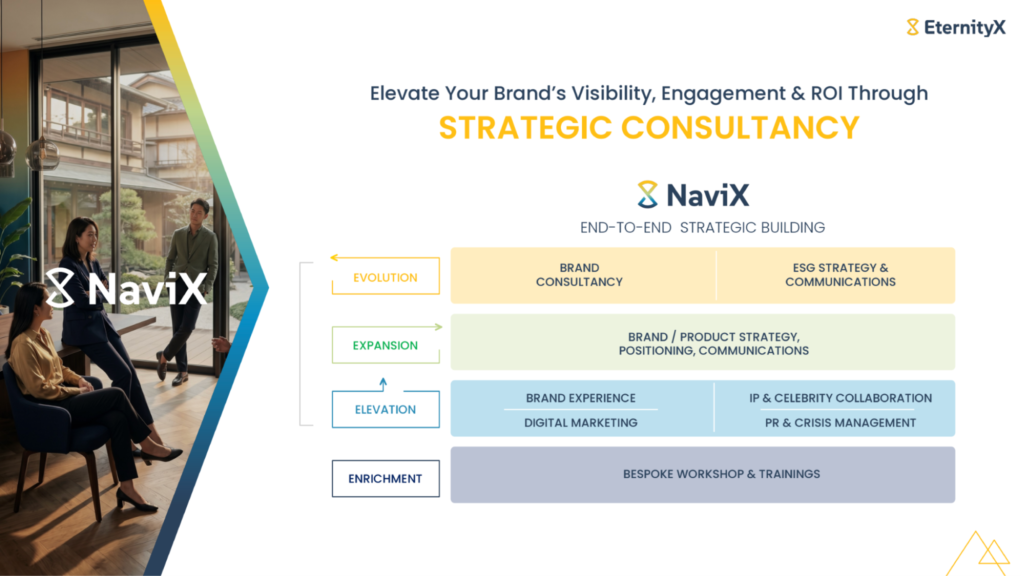
- NaviX, EternityX’s integrated market-entry and cultural-strategy service, advises on the structural side — which route fits your goals, timeline, and risk appetite — as part of a broader entry strategy that goes well beyond translation or localisation.
- PilotX handles execution either way: a single programmatic console that can activate campaigns whether you’re buying onshore or cross-border, so your route to market doesn’t force you into a different toolset.
That combination lets brands pick the structure that fits — and change it as they grow — without rebuilding their media operation each time.
Ready to launch your cross-border campaign in China?
About EternityX Marketing Technology
At EternityX, we equip brands and businesses to master the realm of Chinese audiences through the Power of Three—PilotX, NaviX, and MediaX. These cutting-edge, AI-powered solutions enable precision targeting, providing data-driven insights that allow companies to connect with profitable audiences in key markets and beyond.
With 12,000+ successful cross-border campaigns for more than 1,000 brands, EternityX helps brands unlock growth, deepen audience connections, and drive long-term success. Our expertise bridges the gap between East and West, ensuring that brands can thrive in a rapidly evolving digital landscape. Learn more about us https://www.eternityx.com.
Frequently asked questions
What is the difference between onshore and offshore media buying in China?
Onshore means buying through a local Chinese entity with local platform accounts, RMB payment, local invoicing, and (where hosting is involved) an ICP license. Offshore/cross-border means reaching Chinese audiences from outside the mainland — usually via a Hong Kong or Singapore entity and cross-border platform access — without a local entity or ICP.
Do I need an ICP license to advertise in China?
An ICP filing or license is required for websites or services hosted on mainland Chinese servers. If you operate cross-border with offshore hosting, ICP is not legally required — but PIPL and other rules can still apply to how you handle Chinese users’ data.
Is offshore media buying cheaper than onshore?
It’s usually faster and lower in upfront cost and overhead, which is why many brands start there. Onshore carries more setup and compliance cost but opens the widest access to inventory and formats.
How long does it take to set up onshore media buying?
For many foreign brands it’s around six months, largely because of the entity setup and ICP process. Timelines vary by province and sector.
Can I switch from offshore to onshore later?
Yes — and many brands do exactly that, starting cross-border to test the market and moving onshore once results justify the investment. Using an execution platform like PilotX that supports both routes makes the transition smoother.
This post is general information, not legal or tax advice. Confirm entity, licensing, and data-compliance requirements with qualified advisors for your specific situation.
Keep learning. This post is part of China Decoded, EternityX’s educational series on advertising and market entry in China. More at the EternityX Global Knowledge Hub.




 As Founder and CEO of EternityX Marketing Technology, Charlene is a pioneering leader in the digital marketing landscape, dedicated to driving growth and innovation. Her role encompasses overseeing the strategic direction of the company, with a strong emphasis on connecting brands to the Chinese market and enhancing their engagement with diverse audiences. Charlene’s unique expertise in digital business allows her to identify key opportunities and efficiently allocate resources, ensuring that brands not only thrive but also build authentic connections with their target markets.