



If you’re launching a brand in China, start with three questions. Who are you trying to reach? What will make your message relevant to them? And how will you get the campaign live and see what works? Audience data, local strategy and campaign execution help you answer those questions together.
China is the world’s second-largest advertising market, with total ad spend of more than US $200 billion.¹ The opportunity is massive. But the gap between “we want to sell in China” and “we are profitably growing in China” is littered with brands that had strong products, adequate budgets, and good intentions — yet still underperformed because they solved for only one part of the problem at a time.
The pattern repeats: a brand buys media without understanding the audience. Or it commissions a market-entry strategy that never translates into live campaigns. Or it collects mountains of data but has no cultural lens to interpret what the data means. Each of these approaches addresses a real need, but none of them works in isolation. As we have explored throughout this China Decoded series — from the fundamentals of programmatic advertising to the case for cultural strategy over translation to the mechanics of onshore vs. offshore media buying — the China market demands all three legs of the stool.
¹Source: Upmetrics, Advertising Industry Statistics (2026).Third-party figures are estimates, not EternityX data.
Three things to plan before you launch
Before you commit budget, decide who to reach, what to say, and how you’ll know whether the campaign worked. The table below shows what data, consulting, and execution each contribute to those decisions.
| Leg | What it covers | What happens without it |
|---|---|---|
| Data | Understanding who your customers are, what they do across apps and how they respond to your adsAudience intelligence, cross-channel identity resolution, behavioural signals, targeting, measurement | You spend budget reaching the wrong people, or the same person five times across disconnected platforms. Attribution is guesswork. |
| Consulting |
Cultural strategy, brand positioning for China, market-entry planning, regulatory navigation, channel selection |
Your campaigns look and feel foreign. Messaging misses cultural context. You choose the wrong platforms or the wrong KOL tier. Compliance surprises derail launches. |
| Execution | Buying ads, managing campaigns across platforms, adjusting spend and meeting ad placement requirements | Your strategy sits in a slide deck. Data insights never reach live campaigns. Budget allocation is static, not responsive. |
Most global brands are strong in at least one of these areas. The ones that struggle in China are usually missing one or two — not because they do not value them, but because they source them from disconnected vendors who do not talk to each other.
1. Data helps you decide who to reach
China’s digital platforms each reveal a different part of consumer behaviour. Someone might discover your product on Xiaohongshu, search for it on Baidu, then buy on Tmall. Those separate signals make it difficult to build a clear picture of your audience.
This is the problem ID Space was built to solve. As we covered in China Decoded #1: How ID Space Solves China’s Biggest Audience Data Problem, EternityX’s cross-channel audience intelligence platform unifies fragmented data into a single addressable view — drawing on 2 billion device IDs and 4,000+ audience labels to build targeting segments that work across China’s entire digital ecosystem².
Understanding who to reach gives you a starting point. Local strategy helps you decide what will make your message relevant to them.
²Source: EternityX (ID Space).(Figures are EternityX’s own stated credentials.)
2. Consulting helps you decide what to say and where

Audience data helps you identify potential customers. The next step is understanding what would make your brand relevant to them and how to communicate that across China’s platforms.
A luxury brand, for example, might use Xiaohongshu to support discovery through creator recommendations, while using WeChat to develop customer relationships. Those channels need different content, formats, and measures of success. The choices should follow what the brand knows about its audience and how they make purchasing decisions.
NaviX, EternityX’s integrated marketing and market-entry consultancy, connects brand strategy, creative, audience intelligence, and media performance. It helps brands turn research into practical decisions about positioning, channel selection, creator partnerships, and messaging suited to Chinese consumers. It also brings platform formats, creative requirements, and compliance considerations into the brief, giving the campaign team a clear plan for launch and measurement.
3. Execution helps you launch the campaign and see what worked
Once the brief is agreed, the team needs to put it into practice across platforms with different account requirements, approval processes, and reporting systems.
Planning execution early helps the team check whether the chosen audiences, formats, and channels can be activated as intended. It also gives them time to agree on tracking and reporting before spending begins.
PilotX, EternityX’s AI-native marketing workflow platform, connects market intelligence, audience planning, campaign activation, and reporting in one workspace. It helps teams move from research to execution and use campaign findings to inform future planning
What happens when teams plan separately
The table below shows what typically goes wrong when brands source data, consulting, and execution from disconnected vendors — a pattern that is still the norm for most foreign brands entering China.
| Disconnection | What goes wrong | Real-world symptom |
|---|---|---|
| Data vendor ≠ media buyer | Audience segments built in one system do not port cleanly to the buying platform. Targeting degrades. Attribution is incomplete. | “Our DMP says we reached 2M high-intent users, but the media buyer’s dashboard shows 800K impressions with no conversion data.” |
| Consulting firm ≠ execution partner |
The plan calls for Xiaohongshu, but the team running the campaign can only buy banner ads elsewhere.The strategy deck recommends a Xiaohongshu-first approach, but the media agency has no RED buying capability and defaults to programmatic display. |
“The strategy was great, but none of it made it into the actual campaign.” |
| Media buyer ≠ data layer | Campaign optimisation runs on platform-reported metrics only, with no cross-channel view. Retargeting across platforms is impossible. | “We know the campaign drove traffic, but we cannot tell which touchpoints contributed or how to retarget across channels.” |
| All three disconnected |
Budget is split across vendors with competing incentives. No single view of the customer. Strategy, data, and execution evolve on separate timelines. |
“We spent our China budget across four vendors and none of them could tell us what worked.” |
How market insights shape the first campaign and the next one
Market research gives the team a hypothesis to test. Audience planning turns that hypothesis into a segment, and campaign activation puts a message in front of that segment on the channels selected in the brief. Reporting then helps the team decide what to change in the next campaign.
For example, a tourism brand entering China might use market research to identify an opportunity with families planning school-holiday trips. The team could use audience insights and a quick survey to refine the segment, then test which message drives more interest in a family package. If booking tracking is in place, the team can review bookings alongside reach and clicks to decide which audience, message, or channel deserves more budget in the next round.

Myth vs. Fact
- Myth: “We just need a good media agency to crack China.”
- Fact: Media buying without audience intelligence and cultural strategy produces campaigns that reach the wrong people with the wrong message. Execution is essential, but it is the last mile — not the starting point.
- Myth: “We can figure out the strategy ourselves and outsource the buying.”
- Fact: Strategy that is disconnected from the execution partner’s capabilities and data access rarely survives contact with the market.
- Myth: “Data is data — we can use our global DMP in China.”
- Fact: Global DMPs typically lack coverage across China’s walled-garden platforms (WeChat, Douyin, Bilibili, Xiaohongshu). China-specific identity resolution, like ID Space’s 2 billion device IDs and 4,000+ labels, is needed to build a unified audience view across the ecosystem.
- Myth: “Localisation is the same as cultural strategy.”
- Fact: Localisation translates what you already have. Cultural strategy rethinks what you say, where you say it, and who says it for you — based on how Chinese consumers actually discover, evaluate, and trust brands. NaviX delivers the latter: integrated marketing and market-entry consulting, not translation.
Where ID Space and PilotX fit
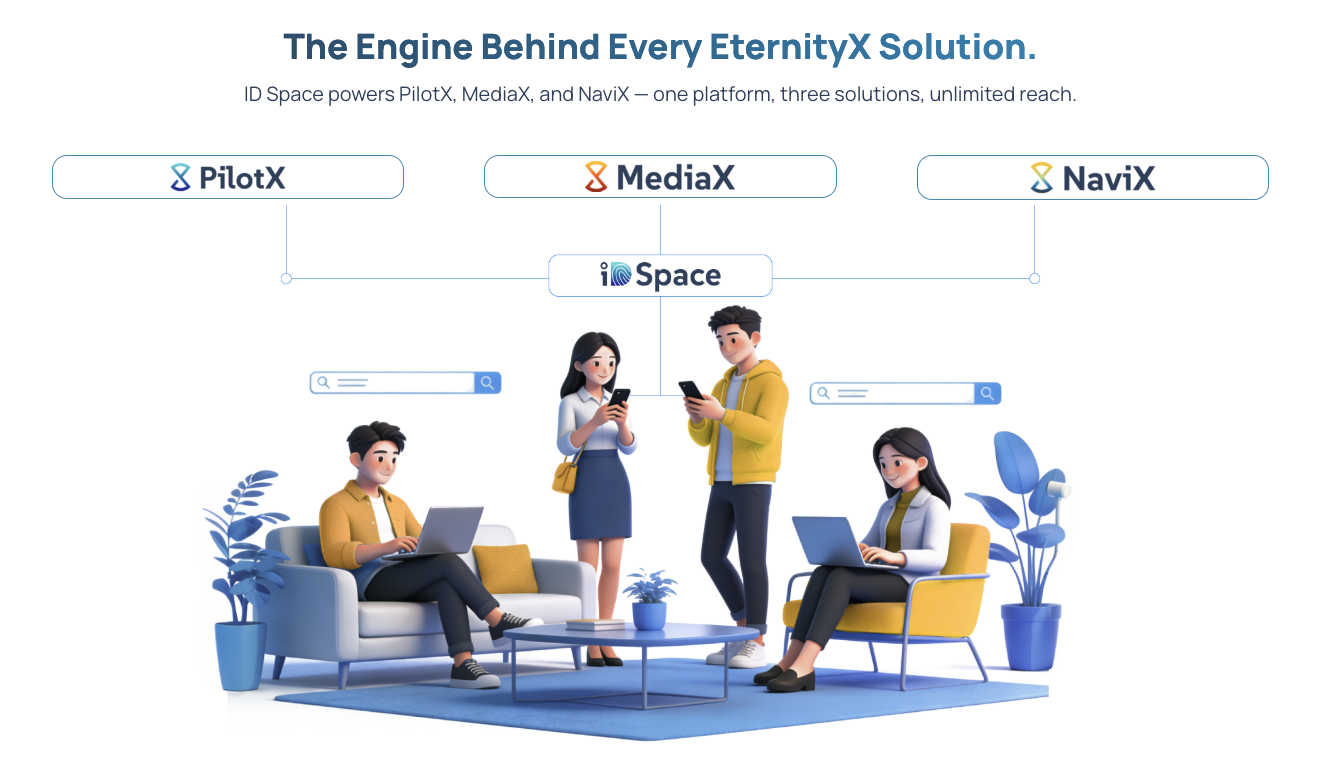
- ID Space — EternityX’s cross-channel audience intelligence platform. Unifies 2 billion device IDs and 4,000+ audience labels into targeting segments that work across China’s fragmented platform ecosystem. The data layer that makes both consulting and execution smarter. 👉 Learn more about ID Space
- NaviX — EternityX’s integrated marketing and market-entry consultancy. Connects brand strategy, creative, data intelligence, and media performance into a single framework — explicitly more than translation or localisation. The cultural and strategic lens that makes data actionable. 👉 Learn more about NaviX
- PilotX — EternityX’s AI-powered platform for planning, running and measuring campaigns. Its Activation module helps teams launch ads across supported Chinese media and adjust campaigns as results come in. 👉 Learn more about PilotX
What to do next
If you are planning your brand’s entry into China — or trying to improve results from campaigns that have not delivered — the first question to ask is whether your data, strategy, and execution are working as one system or three separate projects. EternityX’s integrated platform was built to close that gap: ID Space for audience intelligence, NaviX for cultural strategy, and PilotX – Activation to launch and manage ads across supported Chinese media.PilotX for compliant, cross-platform media execution — connected by design, not stitched together after the fact.
About EternityX Marketing Technology
At EternityX, we equip brands and businesses to master the realm of Chinese audiences through the Power of Three — PilotX, NaviX, and MediaX. These cutting-edge, AI-powered solutions enable precision targeting, providing data-driven insights that allow companies to connect with profitable audiences in key markets and beyond. With 12,000+ successful cross-border campaigns for more than 1,000 brands, EternityX helps brands unlock growth, deepen audience connections, and drive long-term success.
Our expertise bridges the gap between East and West, ensuring that brands can thrive in a rapidly evolving digital landscape. Learn more at https://www.eternityx.com.
Frequently asked questions
- Why do so many foreign brands struggle with China market entry?
Most struggle because they treat data, strategy, and execution as separate workstreams sourced from disconnected vendors. The result is audience insights that never reach live campaigns, strategies that do not account for execution constraints, and media buying that runs without cultural context or cross-channel data. Integrating all three into one system is what separates brands that grow in China from those that stall.
- Can I use my global DMP for China campaigns?
Global DMPs typically lack coverage across China’s walled-garden platforms — WeChat, Douyin, Bilibili, Xiaohongshu, and others. Effective targeting in China requires a China-specific identity resolution layer, such as ID Space, that unifies data across these closed ecosystems into a single addressable audience view.
-
What is the difference between localisation and cultural strategy?
Localisation adapts existing assets — translating copy, adjusting visuals, reformatting for local platforms. Cultural strategy goes further: it rethinks brand positioning, channel selection, creator partnerships, and messaging based on how Chinese consumers actually discover, evaluate, and trust brands. NaviX delivers the latter — integrated marketing consulting that connects brand strategy to data and execution.
- How does PilotX – Activation help brands run campaigns in China?
PilotX – Activation gives international brands one place to set up and manage ads across supported Chinese media. Teams can choose who to reach, use AI-assisted bidding and monitor results while the campaign is live.PilotX provides licensed onshore infrastructure that lets foreign advertisers run compliant programmatic campaigns across China’s major platforms from a single console, without needing a WFOE, ICP filing, or separate ad accounts on each platform. Its built-in compliance layer handles entity requirements and ad-placement rules.
- How are ID Space, NaviX, and PilotX connected?
They are designed as an integrated system. ID Space provides the audience intelligence that informs NaviX’s strategic recommendations and powers PilotX’s targeting. NaviX shapes the strategy that guides PilotX’s execution. PilotX feeds campaign performance data back to ID Space for continuous optimisation. The three products share data and insights by design, eliminating the disconnection that plagues multi-vendor setups.
Keep learning. This post is part of China Decoded, EternityX’s educational series on advertising and market entry in China. More at the EternityX Global Knowledge Hub.



 As Founder and CEO of EternityX Marketing Technology, Charlene is a pioneering leader in the digital marketing landscape, dedicated to driving growth and innovation. Her role encompasses overseeing the strategic direction of the company, with a strong emphasis on connecting brands to the Chinese market and enhancing their engagement with diverse audiences. Charlene’s unique expertise in digital business allows her to identify key opportunities and efficiently allocate resources, ensuring that brands not only thrive but also build authentic connections with their target markets.